Source Commercial Janitorial Supplies with a Business Trade Account in York
Source Commercial Janitorial Supplies with a Business Trade Account in York
Blog Article
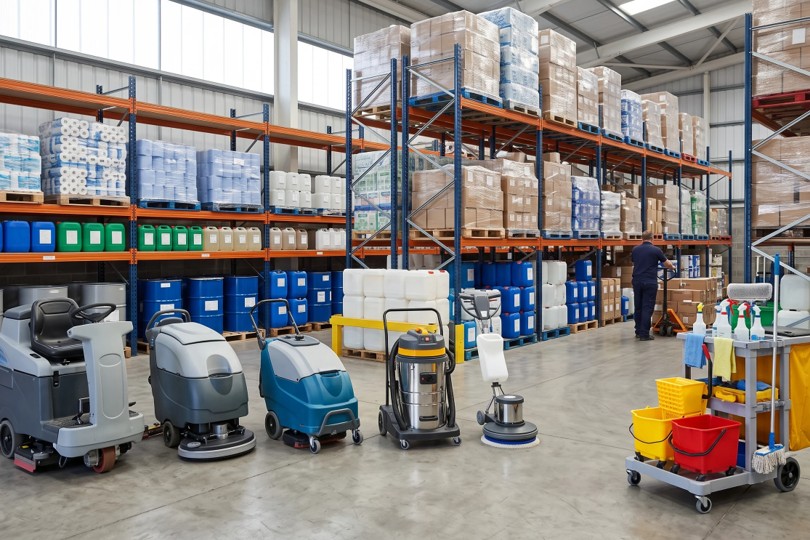
Commercial Janitorial Supplies on a Trade Account
Trustworthy commercial janitorial supplies sustain streamlined facilities management across the United Kingdom. Cleaning contractors, healthcare estates and schools need constant access to professional equipment and chemicals. Erratic supply chains and retail markups reduce margins and disrupt site schedules. Professional-grade equipment reduces downtime and protects surfaces from premature wear. A consistent trade procurement channel stabilises expenditure and supports compliance with UK hygiene and COSHH obligations.
Balancing cash flow against immediate cleaning requirements generates genuine tension for small contractors and growing facilities teams. Many providers struggle to predict consumable costs accurately across live client contracts. Should your organisation keep buying on an ad-hoc basis, or would a credit agreement provide greater resilience whilst safeguarding working capital?
Key Takeaways
- Consolidated monthly invoicing on thirty-day terms simplifies financial administration for facilities teams running various operational sites across the United Kingdom.
- Daily price checks across principal wholesale lines shield cleaning contractors from sudden price rises on essential commercial janitorial consumables.
- Dropping minimum order requirements lets small operators buy professional concentrates without tying up capital in superfluous on-site stock.
- Purchase, lease and short-term hire routes for floor care machinery let contractors tailor acquisition costs to contract length and cash flow.
- Disinfectants tested to BS EN 14476 give care and healthcare providers documented evidence of virucidal efficacy for Care Quality Commission inspections.
Procurement Routes for Commercial Hygiene Consumables
Modern cleaning operations need a open procurement framework that reconciles cost predictability with chemical performance. Facilities teams should weigh credit mechanisms, volume flexibility and documentation before committing to a janitorial partner. The table below sets out how the common procurement routes compare across the metrics that matter most on commercial sites.
The procurement route you select directly affects operating margins and administrative workload across your portfolio. In practice, we find that contractors who synchronise purchasing with their billing cycles prevent sudden capital shortfalls. Reviewing these structural differences also highlights where compliance paperwork is most likely to fall short during a client audit or inspection.
| Procurement Model | Cash Flow Impact | Minimum Order Rules | Compliance Documentation |
|---|---|---|---|
| Cash Purchase | Immediate capital outflow per order | Often subject to supplier minimums | Standard batch documentation |
| 30-Day Trade Account | Consolidated monthly payments | No MOQ on core stock lines | Safety Data Sheets supplied with orders |
| Fixed-Term Machinery Lease | Predictable monthly operating expense | Arranged per machine | Warranty and service logs included |
| Ad-Hoc Retail Sourcing | Unpredictable retail price fluctuations | Unit-level purchasing | Documentation often incomplete |
Trade Accounts Compared with Cash Transactions
Cash Flow Benefits of Thirty-Day Credit Terms
A trade account supplies thirty-day net payment terms that directly boost working capital for commercial contractors. Instead of processing multiple card transactions each week, procurement teams settle every delivery through one consolidated monthly statement. This structure stops cash shortfalls during active billing cycles, when contractors often wait weeks for client payments to clear.
Picture a contractor serving corporate offices across Leeds, Wakefield and Sheffield. Ordering consumables eight times a month on company cards creates substantial administrative drag. Each order needs manual receipt reconciliation. A credit facility unifies these purchases under defined purchase order numbers. Teams can use professional chemistry on client sites weeks before those clients settle their invoices. As a result, contractors safeguard their cash reserves.
Application Requirements and When Cash Purchases Fit
Applying for a commercial credit facility requires uncomplicated business verification rather than protracted paperwork. Applicants typically give their registered company number, VAT details, bank or trade references and an authorised signatory. We review trade account applications within twenty-four to forty-eight hours, so operational delays stay to a minimum for new customers.
Cash purchases remain appropriate for newly formed sole traders awaiting credit approval. They also suit organisations commissioning a one-off emergency deep clean. However, an approved trade account provides operational priority, including dedicated support and faster back-order allocation. Opening an account does not commit the contractor to a monthly spend quota. Operational control stays entirely with the buyer.
Wholesale Rate Verification and Cost Controls
Daily Price Checks Against UK Wholesale Rates
A robust price-check guarantee shields commercial buyers from the gradual cost inflation widespread across industrial distribution. We benchmark core consumable lines against major UK wholesale rates so professional users do not overpay. The checks include paper systems, personal protective equipment and core chemical concentrates throughout the catalogue.
Wholesale prices change with pulp markets, energy costs and polymer availability. Sometimes a trade buyer finds an identical stocked line listed more cheaply by a UK competitor. Our pricing team then checks and matches the verified rate within one working day. This monitoring spares facilities managers from checking catalogues before every everyday order.
Hidden Risks of Unregulated Marketplace Sourcing
Buying trade price cleaning supplies through secondary online marketplaces introduces concealed risks for commercial operators. Third-party listings can conceal out-of-date chemical batches, compromised seals or grey-market goods without verifiable safety paperwork. Professional cleaning depends on traceable product provenance, so formulations behave exactly as their technical data claims.
Unverified products also compromise an employer's position under COSHH. Genuine wholesale suppliers issue a current Safety Data Sheet and exact dilution rates for every concentrate. Buying through verified commercial channels reduces staff injury, chemical wastage and surface damage. Unstable or mislabelled formulations cause much of that damage on commercial sites.
Did You Know?
Under Regulation 6 of the Control of Substances Hazardous to Health Regulations 2002, employers Commercial Janitorial Supplies must complete a suitable and sufficient risk assessment before work with hazardous cleaning chemicals begins. Where five or more people are employed, the significant findings must be recorded.
Fulfilment Logistics and Collection Options
Regional Fleet Delivery and Next-Day Courier Networks
Our distribution model merges dedicated regional logistics with established national copyright partnerships to keep delivery schedules uninterrupted. Regional transport routes carry weighty palletised orders, such as bulk chemical drums and floor care machinery. National courier services dispatch time-critical, smaller orders for next-working-day delivery to commercial sites across the country.
Orders confirmed before the 2pm cut-off are picked and palletised the same day at our central warehouse. A school estate in York or a care home in Doncaster can rely on structured regional vehicle runs. Time-critical items, such as replacement vacuum motors or specialist PPE, travel via express networks to stop site disruption.
Direct Collection from the Selby Warehouse
Direct collection from our Selby warehouse provides regional contractors an efficient alternative to timetabled road deliveries. Contractors working near Pontefract, Goole or Castleford can place an order and arrange a collection window. This arrangement addresses pressing stock emergencies on busy commercial sites without waiting for the next delivery run.
Trade clients present an authorised purchase order number and trade identification at the collection bay. The warehouse operates between 10am and 4pm on weekdays. A simple call ahead enables the team to pick, palletise and stage goods for a fast turnaround.
Inventory Strategy with Zero Minimum Order Thresholds
Commercial Agility for Growing Contractors
A trade account with no MOQ lets developing businesses access trade-tier pricing without tying up capital in excess stock. Mainstream distributors often enforce high minimum spend limits that force smaller operators to commit essential funds. Lifting that barrier allows contractors to buy exactly what their current schedule requires.
Contractors can order a single five-litre concentrate, one box of nitrile gloves or a replacement squeegee blade at wholesale rates. Small cleaning firms in Harrogate, Dewsbury or Batley can take on specialist contracts with confidence. They do not need to maintain expensive rented chemical stores. This flexibility helps smaller firms compete against large national facilities providers.
Filler Stock and Concentrated Storage Savings
Imposed minimum order thresholds force facilities buyers into purchasing filler goods simply to reach a supplier's delivery threshold. That stock often sits spoiling in moist site cupboards for months, locking up operational cash. Buying on demand keeps working capital free for business development, staff training and new contract mobilisation.
Concentrated solutions and water-soluble sachets increase these storage savings further. A single 50-sachet SoluCLEAN Disinfectant Floor Cleaner pouch produces 250 litres of ready-to-use solution. Each sachet dissolves into one five-litre bucket, replacing heavy pre-diluted containers. Combining zero minimum quantities with compact concentrates removes the cost of over-purchasing.
Machinery Procurement: Purchase, Lease or Hire
Capital Allocation and Tax Treatment
Acquiring industrial floor care machinery requires a thorough assessment of capital expenditure against regular operating budgets. Outright purchase provides instant ownership and full warranty cover, suiting well-funded operators with predictable routines. However, high-value scrubber dryers and carpet extractors can consume substantial reserves when smaller contractors buy them outright.
Leasing spreads machine costs over flexible two, three or five-year terms. For most UK businesses, operating lease rentals count as a revenue expense and are generally deductible for tax. Treatment depends on the lease type, so check it with your accountant. Leasing protects working capital. It also lets contractors bid on tough contracts without emptying cash reserves.
Short-Term Hire for Temporary Demand
Short-term machine hire handles occasional spikes in demand, such as post-construction cleans or unexpected equipment failures. Hiring removes long-term depreciation and maintenance liabilities for machines used only occasionally. It also lets contractors trial sophisticated equipment on site before committing to a permanent capital purchase or longer lease agreement.
The i-mop XL Plus illustrates the productivity gains available from latest compact scrubber dryers. Its manufacturer states theoretical coverage of up to 1,800 square metres per hour. Actual output typically sits between 1,000 and 1,300 square metres per hour. Aligning the acquisition route to contract duration keeps each machine profitable, whether purchased, leased or hired.
Healthcare and Education Compliance Standards
EN 14476 Virucidal Testing in Healthcare Settings
Healthcare environments expect verified chemical performance to stop pathogen transmission among susceptible patients and residents. BS EN 14476 is the standard test for the virucidal activity of chemical disinfectants in medical settings. Products tested to it carry documented evidence of efficacy against specified viruses under defined contact times and conditions.
In care homes and healthcare premises, Care Quality Commission inspectors review cleanliness under Regulation 15 and infection control under Regulation 12. Providers must prove that premises and equipment are clean and properly maintained. Chemistry supplied with full technical data, such as SoluCLEAN Anti-Viral Cleaner, gives facilities teams transparent audit documentation. That evidence underpins their infection prevention records.
Rapid Hygiene Turnarounds Across School Estates
School estates need cleaning chemistry and equipment that restrict cross-contamination whilst keeping pupils and staff safe. Corridors, washrooms and dining halls warrant quick, reliable cleaning during brief changeover windows. Equipment must run quietly and leave hard floors dry quickly, because wet surfaces pose an clear slip risk in bustling school corridors.
Compact scrubber dryers scrub and dry floors in a single pass. Corridors become safe for foot traffic again between lessons. Pairing this equipment with certified surface wipes reinforces the hygiene expectations of local authority and academy trust estates teams. Documented cleaning schedules, supported by compliant consumables, establish a transparent record for health and safety audits.
Cross-Contamination Controls and Colour-Coding
BICSc Colour Coding for Hygiene Zones
Preventing cross-contamination between hygiene zones depends on uniform use of a established colour-coding system. The British Institute of Cleaning Science scheme assigns red to washrooms, blue to general low-risk areas, green to catering zones and yellow to clinical areas. Dividing cloths, mop heads and buckets stops operatives carrying pathogens between zones.
Applying the scheme to spray bottles and dosing equipment reduces operator error on busy sites. Clearly labelled, colour-specific bottles help operatives use the correct formulation on each surface. Washroom chemicals then never reach dining tables or office desks. In practice, colour coding is among the first controls a client auditor inspects on site.
COSHH Dilution Control and Safety Data Sheets
The COSHH Regulations require employers to give staff suitable information, instruction and training on the chemicals they handle. That covers safe dilution, application and storage of commercial concentrates. Faulty manual dosing harms surfaces, wastes stock and heightens exposure to chemical vapours. Pre-measured delivery systems remove much of this variability on site.
Water-soluble sachets dissolve in tap water to produce an exact concentration, restricting direct skin contact with chemicals. Every commercial janitorial supplies order provides traceable Safety Data Sheets. Site safety files therefore stay complete and audit-ready. Documented dilution guidance, colour-coded equipment and current training records defend contractors when enforcement officers inspect.
Final Thoughts
Choosing a trustworthy partner for commercial janitorial supplies turns procurement from a fragmented chore into a strategic advantage. Structured credit, transparent price monitoring and consistent delivery keep facilities teams fully equipped. Adaptable terms remove unnecessary cash flow restrictions. Businesses of every size can then introduce professional chemicals and modern machinery without inflated overheads.
Clients and regulators increasingly seek verified sustainability, simpler recycling and rigorous audit compliance. Cleaning providers therefore need adaptable supply chains. Concentrated formulations, structured colour coding and flexible machinery acquisition protect both operating margins and client welfare. Verified products and reliable distribution give cleaning teams the foundation to provide reliable hygiene standards across every managed facility.
Frequently Asked Questions
Q: What documentation is required to open a commercial cleaning trade account?
A: A commercial trade account needs standard business details. Applicants typically provide their registered company name, company registration number, trading address and VAT registration details where applicable. We also seek trade credit references and the signature of an authorised director or partner. Most applications are reviewed and processed within twenty-four to forty-eight hours. Approved accounts receive a thirty-day net credit facility, so contractors can order key stock on structured payment terms.
Q: How does the daily price-check guarantee work on wholesale janitorial lines?
A: The price-check guarantee compares core janitorial consumables against prevailing UK trade suppliers. Suppose an account holder finds an identical stocked line offered more cheaply by a verified UK distributor. Our pricing team assesses the evidence within one working day. Once product specification and availability are confirmed, we match the verified price. This process affords facilities managers reliable wholesale rates without negotiating every individual order or checking competitor catalogues themselves.
Q: Can smaller businesses purchase supplies without meeting a minimum order value?
A: Yes. Commercial customers can buy janitorial supplies with no minimum order quantity. Small facilities teams and independent contractors can order a single five-litre container or one case of gloves. They can also buy replacement machine parts at standard trade prices. This lifts the pressure to buy superfluous filler stock. Growing businesses keep their cash flow intact whilst sourcing exactly what their active cleaning contracts specify.
Q: What are the main benefits of leasing commercial floor scrubbers instead of buying outright?
A: Leasing spreads the cost of floor care machinery across fixed monthly payments, usually over two to five years. This preserves working capital for wages, stock and contract mobilisation. For many UK businesses, operating lease rentals count as a revenue expense and are generally deductible against taxable profits. The precise treatment depends on the lease type, so confirm it with your accountant. Leasing also makes it easier to upgrade to newer models when the term ends.
Q: Why does EN 14476 testing matter for healthcare cleaning chemicals?
A: BS EN 14476 is a laboratory test standard that gauges how effectively a chemical disinfectant inactivates viruses under set contact times and conditions. Care Quality Commission inspectors expect providers to control infection risks under Regulation 12 and keep premises clean under Regulation 15. The regulations do not prescribe a precise test standard. However, disinfectants tested to BS EN 14476 give providers documented, independent evidence that their cleaning products work against viral pathogens.
Professional Janitorial Supplies in Yorkshire and Beyond
- Halifax Janitorial Supplies
- Barnsley Janitorial Supplies
- Bradford Janitorial Supplies
- Castleford Janitorial Supplies
- Dewsbury Janitorial Supplies
- Doncaster Janitorial Supplies
- Harrogate Janitorial Supplies
- Huddersfield Janitorial Supplies
- Hull Janitorial Supplies
- Leeds Janitorial Supplies
- Lincoln Janitorial Supplies
- Manchester Janitorial Supplies
- Rotherham Janitorial Supplies
- Scunthorpe Janitorial Supplies
- Selby Janitorial Supplies
- Sheffield Janitorial Supplies
- Wakefield Janitorial Supplies
- York Janitorial Supplies
- Grimsby Janitorial Supplies
- Chesterfield Janitorial Supplies
- Goole Janitorial Supplies
- Pontefract Janitorial Supplies
- Normanton Janitorial Supplies